My Wife Drinks a Bottle of Wine a Night: A Guide to Helping Her
Jun 29, 2026
Seeing the person you love slide into a nightly routine with alcohol is a lonely, exhausting experience. You find yourself quietly counting the empty bottles in the recycling bin, guessing how many glasses they've actually had, or typing "my wife drinks a bottle of wine a night" into a search bar late at night.
If you are reading this as a worried husband, spouse, or partner, I want you to know two things immediately: You are not overreacting, and you are not helpless.
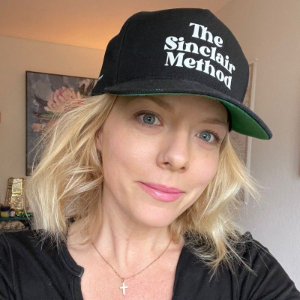
My name is Katie Lain. I am a recovery coach who has helped thousands of people rewrite their relationship with alcohol. But long before that, I was that wife. For ten years, I was the one drinking a bottle of wine (or more) every single night, hiding the depth of my struggle from my husband out of sheer shame.
Below, we are going to look at why standard ultimatums fail, how a modern psychological framework called the CRAFT model can help, and a neuroscience-backed option called The Sinclair Method (TSM) that allows your partner to heal without the paralyzing fear of quitting forever.
The Secret World of the "Bottle-a-Night" Routine
When a partner drinks a bottle of wine every single evening, it rarely looks like the extreme "rock bottom" versions of alcoholism we see in movies. They are often highly successful, wonderful parents, and brilliant professionals.
Because it happens in a comfortable home setting, spouses often experience a confusing internal tug-of-war. If you are trying to understand what your partner is experiencing internally during this cycle, read my personal story of
A few years ago, I sat down for an interview with Bruce, a tech sector professional whose wife, Jane, was caught in this exact destructive cycle.
He described the profound confusion of knowing something was deeply wrong, but facing a wall of secrecy:
"I would come home from work and she had been in bed all day... she would not disclose what happened. I had to find out in a roundabout way that it was heavy drinking, secretive... I was much less bothered by the alcohol part than I was about being dishonest about it, because I just wanted to make it clear that I sympathize and empathize."
Listen to my full conversation with Bruce below to hear how he navigated his wife's secret drinking:
If you are facing that same dishonesty or defensive wall, please understand: The lying isn't because she doesn't love you. It is driven by the severe shame of losing control.
Why Traditional Rehab Approaches Often Trigger a Relapse
The standard advice society gives us when a loved one is overdrinking is simple: Force them to go to AA or checked into a rehab center. But for a gray-area nightly drinker, the anxiety of being labeled an "alcoholic" and being told they can never drink again for the rest of their life is so terrifying that it causes them to retreat further into hiding.
Bruce witnessed this firsthand when he initially pushed Jane toward traditional abstinence meetings before they discovered a medical solution:
"She told me the night she was going to go [to an AA meeting], and she came home from the meeting just drunk... You can't make someone go through a process that causes them that much anxiety. Going to a meeting for her at that point in time felt so terrible that she had to get drunk."
A Better Way: The CRAFT Model for Spouses
If ultimatums and forced abstinence don't work, what does? Modern addiction psychology heavily favors the CRAFT Method (Community Reinforcement and Family Training).
Unlike traditional interventions that use confrontation and shame, CRAFT teaches spouses to use positive reinforcement and collaborative communication.
-
Don't confront them while they are drinking: As Bruce noted in our interview, "the dishonesty was more when she was drunk. I think that in moments of being sober, I could express the depth of what I was feeling, and she could admit to it."
-
De-stigmatize the habit: Alcohol is an incredibly addictive, biologically engineered substance. Frame it as a physiological habit loop, not a moral failure. As Bruce beautifully put it, "There's a machine out there who wants you to drink, just like there's a machine out there that wants you to eat Big Macs... it's not her fault at all."
📘 Recommended Reading: If you want a step-by-step manual on how to use this exact approach at home, I highly recommend reading "Beyond Addiction: How Science and Kindness Help People Change." It completely upends the old, painful treatment models and gives families a practical, loving game plan to help their partner want to change.
Introducing The Sinclair Method (TSM) as an Ally
The breakthrough for my marriage—and for Bruce and Jane—was discovering The Sinclair Method (TSM). This is an at-home, private medical treatment that utilizes a generic medication called Naltrexone taken one hour before drinking.
Over time, it chemically blocks the chemical "reward" the brain gets from wine, naturally fading the cravings and restoring a person's biological "off-switch."
The reason TSM is such a game-changer for spouses to bring up is that it does not require immediate, total abstinence. Your partner can still socialize. It removes the terrifying "forever" aspect of quitting.
Bruce recalled how their lives completely transformed once Jane started TSM:
"In this year, there's never been a moment where I've come home and found her in bed... Having a drink doesn't mean that all the alcohol in the house will be finished. It won't. It might just be a glass or two of wine and that's fine... There are no more hangovers, no more really sloppy mornings. The half-bottles of wine left in the fridge... it's wonderful."
📚 Resources for Further Learning
Before you broach the subject with your partner, take some time to build your own confidence in the science behind this method. Here are the best resources to start with:
-
The Book: Read "The Cure for Alcoholism" by Dr. Roy Eskapa. This is the definitive book on The Sinclair Method, featuring a foreword by Dr. David Sinclair himself. It explains the exact clinical trials, the neuroscience of pharmacological extinction, and provides a literal roadmap for medical recovery.
-
The TEDx Talk: Watch actress Claudia Christian’s famous TEDx Talk,
How I Overcame Alcoholism Using the Sinclair Method -
The Documentary: Watch the full-length documentary
One Little Pill on YouTube
How to Start the Conversation Tonight
If you are ready to stop managing her drinking and start helping her heal, the absolute best first step is to remove the shame.
Instead of a high-stress confrontation at night while she is drinking, approach her during a calm, sober morning. Instead of saying, "Your drinking is ruining things," try opening the door with compassion:
"I love you, and I see how stressed you are lately. I stumbled across a story by a woman who used a medical method to cut back her nightly wine drinking at home, without ever having to quit entirely. It completely changed her life. I’d love to just watch this quick video with you, whenever you have a few minutes."
When you are ready to take that next step together, use these resources to guide you:
🎥 Watch the Evidence
Listen to my full, unfiltered interview with Bruce to see exactly how an everyday couple navigated the ups and downs of this journey together and came out stronger on the other side. 👉
🧬 Explore the Science
Want to understand the medical breakthrough behind this process? Dive deep into the clinical data and learn exactly
🤝 Get At-Home Support
You do not have to figure this out alone. Explore our private, compassionate Thrive Support Program, designed to provide step-by-step video courses, coaching, and community for both individuals and families. 👉
About the Author